Most regular work boots are built to handle a bit of everything: dirt, concrete, ladders, uneven ground, and changing weather. For many trades, that’s perfect.
But asphalt paving is a very specific environment. You’re walking for hours on a hot surface, surrounded by grit and burning asphalt, and your footwear gets exposed to heat all day long.
That’s where the difference between a general boot and a true asphalt paving boot becomes obvious.
Date written: January 7th, 2026. information may be outdated, please contact us if you want a up-to-date confirmation.
Many boots advertise heat resistance, ''We have a 572°F heat-resistant outsole!''. Yes, technically you do (we do have it as well). But what is done to keep the heat away from your feet? Most regular workboots offer no insulation against heat, which leads to burning feet very quickly. That's where Asphalt Pro makes a difference
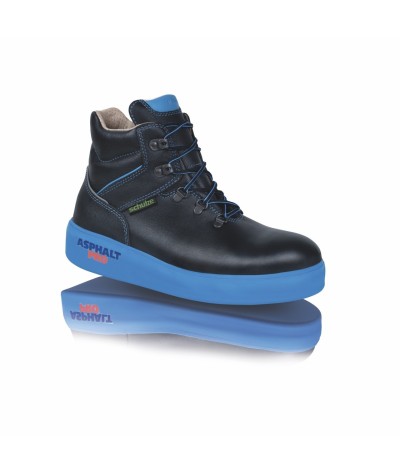
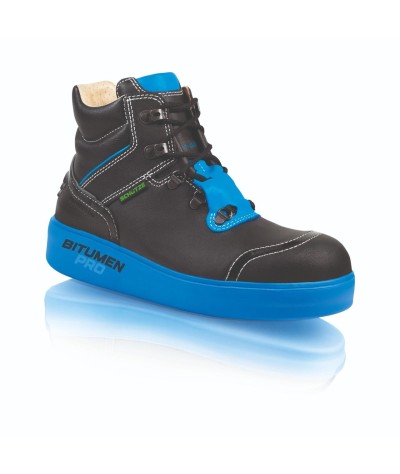
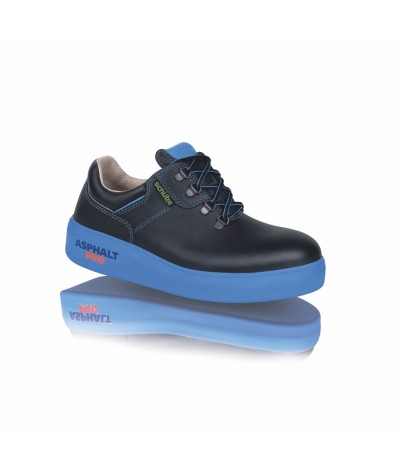
Asphalt Pro is built around that the true reality of paving. Between the sole and your feet, is a polyurethane foam body. The polyurethane (PU) foam body acts as a heat shield to help reduce heat transfer from hot asphalt into the footbed.
That matters because you don’t just want an outsole that can handle heat, you want boots for asphalt paving that help keep your feet more comfortable and workable over the entire shift.
Paving is not hiking. Aggressive tread can turn into a magnet for gravel and asphalt buildup, making boots feel heavier and messier as the day goes on. Most workboots have a deep tread, for maximum grip. But you're working on asphalt.
That’s why Asphalt Pro uses a flat sole —a treadless boot for paving— designed specifically for asphalt work.
With a flat sole boot for asphalt, you get:
If you’re searching for asphalt paving boots that are actually paving-friendly, a flat/treadless outsole is one of the biggest day-to-day advantages.
Many work boots use strong industrial adhesives to bond the outsole to the midsole/upper. That can be perfectly fine for general construction, but constant hot-surface exposure can be a different story.
When adhesives are repeatedly heated, the glue layer can soften, especially near the outsole edge where heat hits first. Repeated heat cycles can also reduce bond strength over time, making the sole more likely to start peeling. And once a small gap forms, grit and moisture can get in, and flexing can “work” that gap wider until it becomes visible separation.
And with stitched boots, there can be swelling from the heating-cycle, which can cause the stitching to loosen/break. It also is insanely difficult to prevent inner heating with a stitched sole, since there isn't a lot of room for a heat-resistant insulation material.
Whether a boot is glued or stitched, asphalt crews often see failure start at the same place: the outsole edge. That’s why paving-specific boots focus on protecting and sealing that area—to reduce the chance that heat + flex + grit turns a small weakness into a blown-out sole
That's why the Asphalt Pro uses a patented Sealing-Edge system. The outer edges of the boot are sealed with high pressure to the upper, so it creates a very strong bond with the sole. It uses no glue or stitching for this, and yet it stays together. And using this, it still has the polyurethane foam body to keep the heat out.
Nowadays, a lot of high-end boots have one weak spot: textile interiors. Whether it’s polyester or a so-called “breathable mesh,” it often isn’t the premium comfort you think you’re paying for—especially when you’re working on hot asphalt all day.
A key issue is moisture management. Many fabrics don’t absorb moisture the same way real leather can, which can make boots feel hotter, sweatier, and less comfortable over long shifts. Even Sioux (a footwear brand with a detailed “shoe know-how” section) states that leather lining is superior in breathability and moisture absorption, and notes that leather can absorb up to three times its own weight in water*.
That’s why the Asphalt Pro uses an all-leather approach where it matters. With real perforated cow leather on the inside, you’re not relying on marketing terms like “mesh” to stay comfortable; your boot is built with materials that naturally support a healthier foot climate during demanding work. The outside is built from 100% real cow leather aswell, so no fake stuff.
And yes, sometimes a boot is marketed as “leather,” but uses very low-grade splits, thin coatings, or imitation materials in key areas. If you’re buying premium work boots for real jobsite abuse, it’s worth paying attention to what’s actually touching your foot every day, not just what the product looks like from the outside.
Finally, most boots are built with a lot of different industries in mind, so the company can sell them to a lot of customers. But there can be niche-markets like asphalt paving, where an asphalt paving specific boot can really shine.
The Asphalt Pro is made in Austria, built specifically for one task: Asphalt Paving. The highly durable heat-resistant flat sole, the Sealing-Edge system, the polyurethane heat-resistant body, the fully leather construction all make it the ideal paving boot for every paver.
And it’s not a new product. Asphalt Pro has been trusted by paving professionals in Europe for over 25 years. If you’re looking for paver boots that are truly asphalt-specific, this is the original idea done right.